

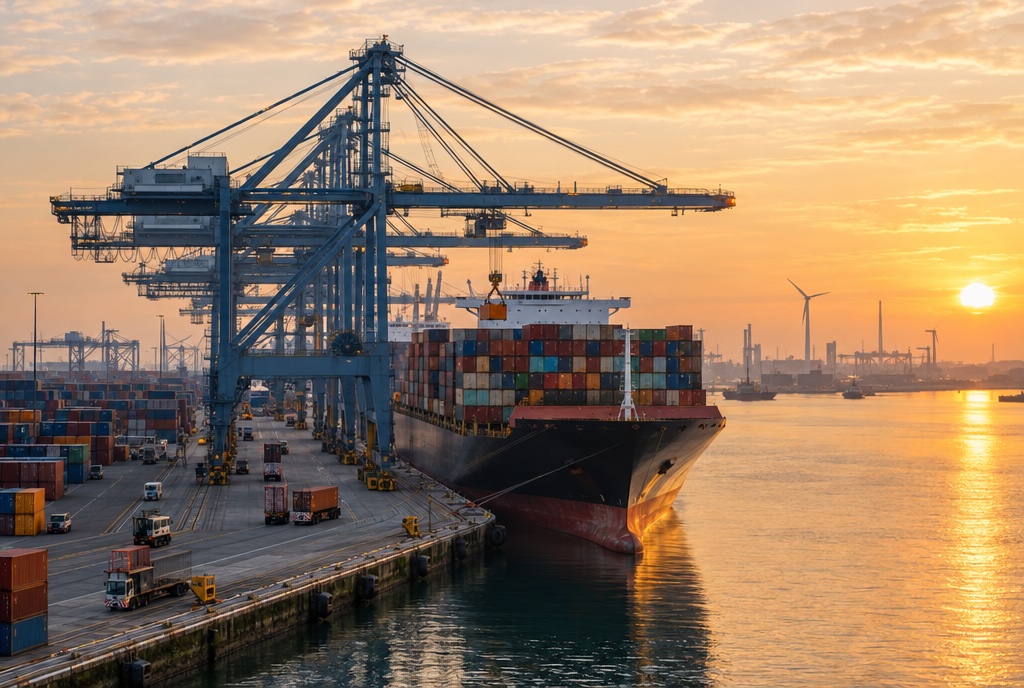
For many small and medium-sized producers, the Netherlands is a sensible starting point for selling Vietnamese food in the EU. The reason is not that the rules are easier here. It is that the country is a convenient logistics gateway, buyers are used to imported goods, and demand for Asian food already exists. Still, food safety, labelling and packaging standards are EU-wide, so you need to be fully prepared.
Why the Netherlands is often the first step
- A gateway to Europe: the Netherlands has major seaports and airports and road links to many neighbouring countries. For a first-time exporter, that makes it a practical place to receive goods.
- Part of the EU single market: in principle, goods that have cleared import into one member state can move within the EU without repeating the full process in every country. This opens the door to other markets later.
- Buyers know Asian food: restaurants, shops and supermarkets already work with Asian ingredients and dishes, so you spend less time explaining what your product is.
- An open business environment: buyers usually work in English and are used to international trade.
What you should look at honestly
The Netherlands is a good gateway, but it is not a shortcut. Keep these points in mind:
- The rules are not lighter: your product must meet EU food law, from ingredients and additives to labelling. Some product groups have their own requirements, so confirm the details for your product with the competent authority or with Miss Linh before you produce your first batch.
- Real competition: there are already many Asian suppliers. You need a clear reason for buyers to choose you, such as natural ingredients, the story behind your business or consistent quality.
- Shelf life: products must arrive with enough shelf life for European buyers to resell them. Transport and customs clearance take time, so plan for this at the production stage.
- Selling directly is a lot of work: finding customers, handling VAT and customs, delivering, and dealing with complaints is a heavy load for a small company.
What Vietnamese producers need to prepare
- Check whether your product can be sold in the EU (ingredients, additives, product category).
- Food-safety certificates, for example HACCP or ISO.
- EU-compliant labelling and packaging.
- An EORI number and a Dutch VAT number.
- Pricing that still leaves you a margin after transport, taxes and distribution.
- A shelf-life plan so goods arrive with enough time left to sell.
The list may look long, but you do not have to do it alone. Miss Linh supports you step by step, and you can read more on the become a supplier page.
How Miss Linh helps you enter the Dutch market
Miss Linh (Vietnam Food Europe B.V., Oegstgeest, the Netherlands) is a B2B platform and service provider. Vietnamese producers sell their products in their own name to European businesses such as restaurants, caterers, shops, supermarkets and wholesalers. You remain the owner of your products until they are sold. The products are stored in a warehouse in the Netherlands, and Miss Linh delivers them to buyers. Because there are no middlemen taking margins, you keep a direct relationship with your buyers.
| Task | Who handles it |
|---|---|
| Food-safety certificates (HACCP, ISO), EU-compliant labelling and packaging, EORI number, Dutch VAT number | The producer, with Miss Linh helping at each step |
| Advice on whether the product can be sold in the EU, pricing advice | Miss Linh |
| Setting up VAT and customs, transport and customs clearance to the warehouse | Miss Linh |
| Listing products, marketing and sales (newsletters, samples, customer visits, trade fairs) | Miss Linh |
| Order handling, collecting payment, delivery, complaints and returns | Miss Linh |
Miss Linh earns a commission on products that are actually sold. We focus on small and medium-sized producers, especially women-led businesses. You can see the producers already on Miss Linh to get a feel for how products are presented. If you make dipping sauces, noodles or spices, have a look at categories such as sauces and condiments, noodles and vermicelli and spices to see how similar products are shown.
Where to start
Start with one flagship product that you are confident about in terms of quality, certification and shelf life. Do not rush to send your whole range at once. Once you know the process and have feedback from buyers, you can expand step by step. If you want to discuss your own product, message the team via the contact page. The team speaks Vietnamese, Dutch and English.
Frequently asked questions
Does selling into the Netherlands mean I can only sell to Dutch customers?
Not necessarily. The Netherlands is part of the EU single market, so in principle goods that have been imported correctly can move within the EU. However, for delivery details and the exact scope of sales, please ask Miss Linh directly, because we do not want to promise anything that is not certain.
Do I need HACCP or ISO certification before I sell?
Producers need suitable food-safety certificates, for example HACCP or ISO. The exact requirements depend on the type of product, so confirm them with the competent authority or with Miss Linh, who will help you with this step.
Do I have to handle customs and VAT myself?
You need an EORI number and a Dutch VAT number, and Miss Linh helps you complete these steps. Miss Linh also takes care of setting up VAT and customs, and of transport and customs clearance of the goods to the warehouse in the Netherlands.
Is this suitable for small, women-led businesses?
Yes. Miss Linh focuses on small and medium-sized producers, especially women-led businesses, with the aim of offering a fair price and equal opportunities.