

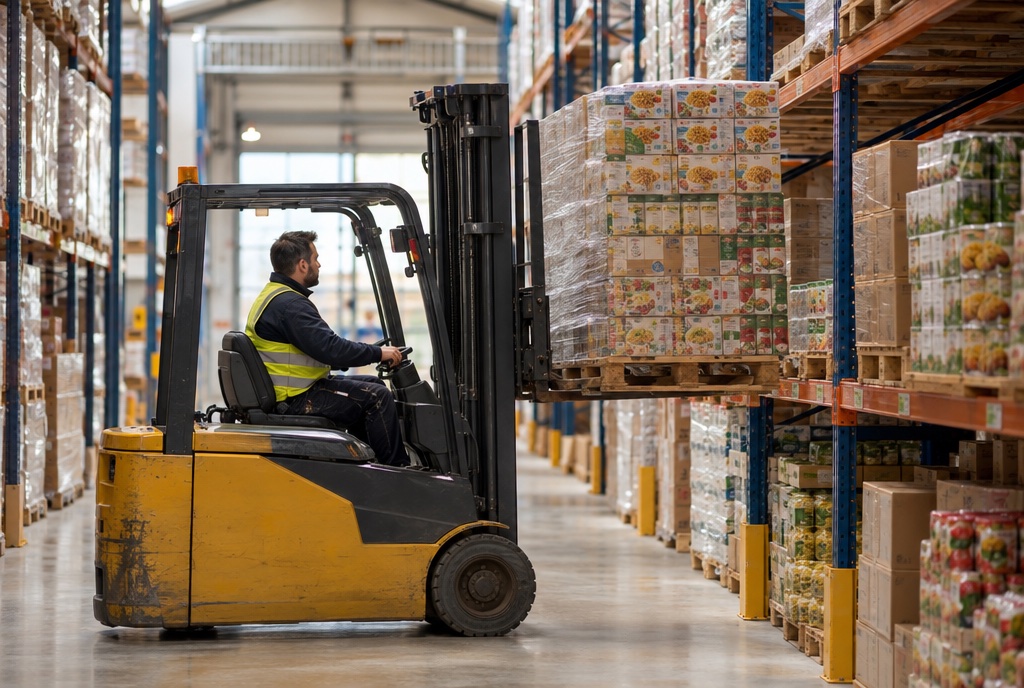
To hold European warehouse stock, you need to ship your goods to a warehouse in the EU before customers place orders. This takes real preparation: food-safety certificates, EU-compliant labelling, an EORI number, a VAT number, transport, customs clearance, and a party to store and deliver your goods. This article explains each step in practical terms, so you know what to do and where to start.
Why having stock in Europe matters
Restaurants, caterers, shops and supermarkets in Europe usually want to order what they need and receive it quickly. They do not want to wait for a whole shipment from Vietnam. If your goods are already in a European warehouse, buyers can order smaller quantities, reorder more often and trust a new supplier more easily. The trade-off is that you must pre-finance the goods and plan your inventory more carefully.
What you need before goods go into a warehouse
Whichever route you choose, you need to prepare the following:
- Check that your product can be sold in the EU. Some product groups, especially products of animal origin, are subject to separate controls. Check each product with the competent authority, or ask us, before you produce your first batch.
- Food-safety certificates, for example HACCP or ISO. The producer is responsible for these.
- EU-compliant labelling and packaging. Labels must meet EU requirements for mandatory information and language. Details depend on the product and the market, so confirm them carefully before printing packaging.
- An EORI number for customs procedures when importing into the EU.
- A Dutch VAT number if the goods are imported and stored in the Netherlands.
- Enough shelf life. Goods must arrive at the warehouse with enough remaining shelf life for European buyers to sell or use them.
Tax and customs rules can differ by product. This is only the general picture and not legal advice, so please confirm the details with Dutch customs or with the Miss Linh team.
Three ways to have stock in a European warehouse
| Approach | What you handle yourself | Points to consider |
|---|---|---|
| Ship each order from Vietnam | Transport, customs clearance and delivery to each customer | No pre-financing of stock, but long delivery times and hard to compete with goods already in a warehouse |
| Rent your own warehouse and logistics partner in the EU | Warehouse contract, EORI and VAT, customs clearance, order intake, delivery, payment collection, complaints | Gives you the most control, but needs staff and knowledge of the EU market |
| Sell via a platform with its own warehouse, such as Miss Linh | Certificates, labelling, packaging, EORI and VAT (we help with these steps) | Suits small and medium-sized businesses that want to start without building their own system |
How Miss Linh helps you have stock in the warehouse
Miss Linh (Vietnam Food Europe B.V., Oegstgeest, the Netherlands) is a B2B platform and service provider. You sell your products in your own name to business customers in Europe: restaurants, caterers, shops, supermarkets and wholesalers. The goods remain your property until they are sold. They are stored in a warehouse in the Netherlands, and Miss Linh delivers them from there to buyers.
We help with:
- advice on whether your product can be sold in the EU, and pricing advice;
- setting up VAT and customs;
- transport and customs clearance to the warehouse;
- listing your products on the platform;
- marketing and sales: newsletters, samples, customer visits and trade fairs;
- order handling, collecting payment, delivery, complaints and returns.
Miss Linh earns a commission on products that are actually sold, with no middlemen taking margins. We focus on small and medium-sized producers, especially women-led businesses. You can read more about why and how to become a supplier on Miss Linh, or see the producers already on the platform.
Practical steps to get started
- Choose one or a few core products. Start with products that have a long shelf life, stable packaging and existing certificates. Categories such as sauces and condiments or noodles and vermicelli are often sought by European buyers.
- Check your certificates and labels. Compare them with EU requirements before printing large quantities.
- Register for an EORI number and a Dutch VAT number. We can guide you step by step.
- Plan the quantity of your first batch. Do not send too much. Consider shelf life and sales potential, and talk to us to make a sensible estimate.
- Ship the goods to the warehouse and list them on the platform. After customs clearance, your goods sit ready in the Netherlands for the first order.
If you are unsure where to begin, contact the Miss Linh team. We speak Vietnamese, Dutch and English.
Frequently asked questions
Do I need to rent my own warehouse in Europe?
Not necessarily. If you sell via Miss Linh, your goods are stored in a warehouse in the Netherlands and delivered from there. You remain the owner of the goods until they are sold.
Which documents do I need to send goods to the warehouse?
In general you need food-safety certificates such as HACCP or ISO, EU-compliant labelling and packaging, an EORI number and a Dutch VAT number. Specific requirements depend on the product, so confirm them with the competent authority or with Miss Linh.
How much shelf life is enough?
We do not give a fixed figure because it depends on the type of product. As a general rule, goods must arrive at the warehouse with enough remaining shelf life for European buyers to sell or use them. Talk to us about your specific product.
Can a small business sell via Miss Linh?
Yes. Miss Linh focuses on small and medium-sized producers, especially women-led businesses. Send your product information through the contact page and we will look at it together.