

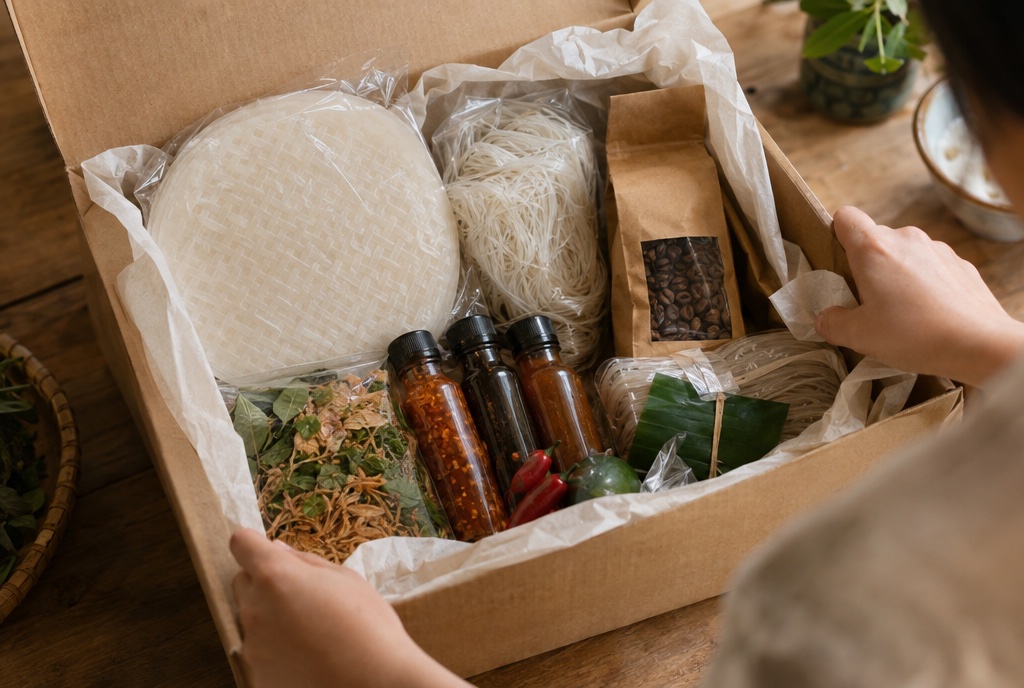
To send product samples to European buyers effectively, send them only to people who have shown real interest, choose one or two flagship products in packaging close to what you actually sell, include complete product information, and plan your follow-up before the parcel arrives. One well-prepared sample pack is usually worth more than many mass mailings that nobody answers.
Below is a step-by-step approach, based on what small and medium-sized producers often run into when they start selling to Europe.
Before you send product samples: ask the recipient first
Samples cost you effort, shipping fees and time, and they take up the buyer’s time too. So do not send them to someone who has never replied to you. First, clarify:
- Who is the recipient? A decision-maker (a restaurant owner, the purchasing team of a store chain, an importer) or just a generic email address?
- Is the need real? A short email asking what kind of product they are looking for and what they will use it for helps you choose the right sample.
- Delivery address: many European businesses only accept deliveries during working hours and need the company name, a contact person and a phone number.
- Can your product be sold in the EU? If you are not sure, check first. Do not send samples of a product that later cannot be placed on the market.
Which samples to send, and how much?
Send little, but send the right thing. For most B2B buyers, one or two flagship products are enough for them to judge both quality and supplier.
- Use packaging close to the real product. Buyers want to see how you present the product, not only how it tastes.
- Send enough to test. Enough for a few people to taste, or for a chef to cook with a few times, but not a whole carton.
- Check the shelf life. Samples must arrive with plenty of shelf life left. This also shows the buyer that your product can meet European shelf-life expectations.
- Choose stable products. Avoid samples that spoil, melt or break easily on a long journey.
Documents to include with the sample pack
A tasty sample is not enough. European buyers need information to decide and to answer their own internal questions about food safety, allergens and use. Prepare:
| Document | Why it matters |
|---|---|
| Product information sheet (in English) | Ingredients, weight, packaging format, shelf life, storage conditions |
| Allergen information | European buyers pay close attention; state it clearly and consistently with the label |
| Food-safety certificates | For example HACCP or ISO if you hold them; only mention what you have actually been granted |
| Short introduction letter | Your company, product story, where the ingredients come from, contact person |
| Serving or usage suggestions | A recipe or usage idea helps buyers picture the product on a menu or shelf |
| Clear contact details | Email, phone number and the name of your contact so the buyer can reply easily |
Shipping and customs: what to keep in mind
Food samples are still imported goods, so they may need customs declarations and inspection. The rules depend on the product and the destination country, so always confirm the details with your courier, the competent authority or Miss Linh before shipping. This is the general picture, not legal advice:
- Products of animal origin (meat, dairy, fish and products made from them) are usually subject to much stricter rules than rice, dried spices, tea or noodles. Ask before you send.
- Couriers usually require an invoice or a document describing the goods. The description should be accurate and match what is in the box.
- The sample label should carry basic, easy-to-read information for the recipient. If the label is not yet EU-compliant, note clearly that this is a sample for evaluation.
- Ask the courier about their conditions for food shipments, then give the buyer the tracking number so they can expect the parcel.
Do not promise the buyer a specific delivery date unless you are sure; transport and customs clearance times can vary.
After sending: follow up so the sample is not forgotten
- Tell the buyer when the sample has been sent, with the tracking number and a list of what is in the parcel.
- Confirm arrival. A short message asking whether it has arrived and is undamaged.
- Agree on a feedback moment. For example, ask whether they can give you their opinion about a week after receiving it.
- Ask specific questions: taste, packaging, the price they expect, the quantities they need, what could be improved.
- Record the feedback so you can adjust your product and your next sample shipment.
How Miss Linh can help when you want to sell in Europe
Miss Linh (Vietnam Food Europe B.V., Oegstgeest, the Netherlands) is a B2B platform and service provider. Vietnamese food producers sell their products in their own name to European businesses: restaurants, caterers, shops, supermarkets and wholesalers. Miss Linh takes care of the work around it, including advice on whether a product can be sold in the EU, pricing advice, setting up VAT and customs, transport and customs clearance to the warehouse in the Netherlands, listing your products on the platform, and marketing and sales (newsletters, samples, customer visits, trade fairs).
The producer remains the owner of its products until they are sold; the products are stored in a warehouse in the Netherlands and Miss Linh delivers them to buyers. On your side, you take care of documents such as food-safety certificates, EU-compliant labelling and packaging, an EORI number and a Dutch VAT number, and Miss Linh helps you with these steps. Miss Linh focuses on small and medium-sized producers, especially women-led businesses, and earns a commission only on products that are actually sold.
You can read why and how to sell via Miss Linh, look at the producers already on the platform, or browse a category such as sauces and condiments to see how products are presented. When you are ready, contact the Miss Linh team; we speak Vietnamese, Dutch and English.
Frequently asked questions
Should I charge European buyers for samples?
There is no single answer. Many producers send free samples to confirmed prospects, but what matters is to agree clearly at the start who pays for the sample and the shipping costs, to avoid misunderstandings later.
How many products should I put in one sample pack?
Usually one or two flagship products, in a quantity large enough to test. A pack that is too big costs more, and the buyer may feel overwhelmed and not know what to evaluate first.
Do samples need an EU-compliant label?
Samples should carry clear, easy-to-read basic information on ingredients and allergens. For products you actually sell, the label and packaging must meet EU rules. Confirm the requirements for your specific product with the competent authority or with Miss Linh.
What if the buyer does not reply after receiving the sample?
Follow up once, briefly and politely, with one specific question, such as what they thought of the taste or the packaging. If there is still no reply, move on to other buyers instead of sending more samples.