

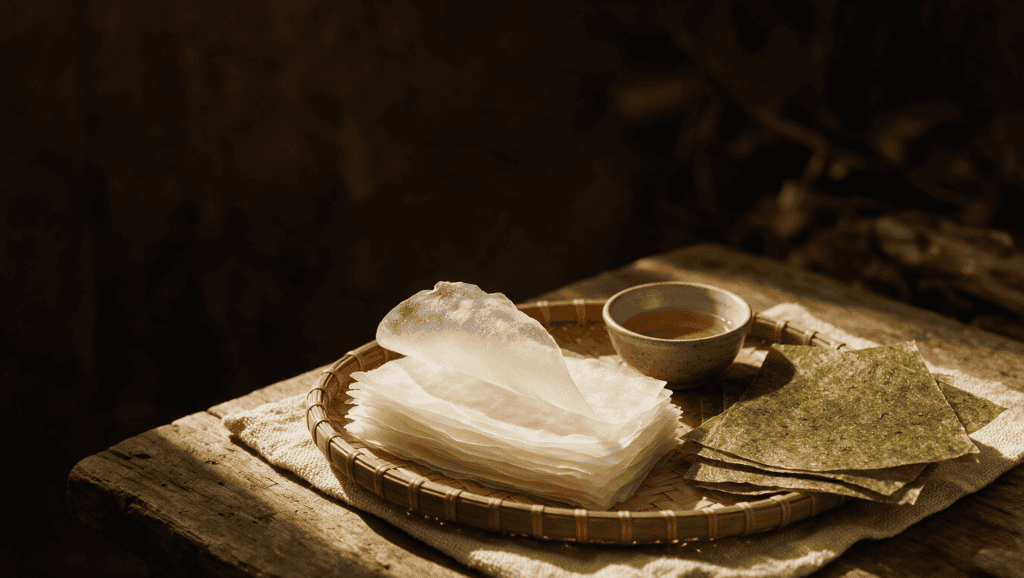
Exporting rice paper to Europe is very realistic: dried rice paper keeps well, and Vietnamese and Asian restaurants and shops in Europe always need it for fresh spring rolls and fried rolls. Still, prepare four things carefully: food safety and certification, labelling that meets EU rules, packaging, and a shelf life long enough for your buyers. This article gives the general picture. Rules can differ depending on the ingredients in your product, so confirm the details with the competent authority or with Miss Linh. This is not legal advice.
Who buys rice paper in Europe?
The main buyers are Vietnamese and Asian restaurants, caterers, Asian grocery shops, supermarkets and wholesalers. Each group needs something different. Restaurants usually want large packs and consistent quality. Retail shops want smaller packs, clear labels and attractive packaging. We have no market statistics to share here, so ask yourself: which type of buyer fits my product best?
Food safety: what Europe cares about most
Rice paper is made from rice flour, tapioca starch, salt and water, so the recipe is simple. European buyers will still ask about the following:
- Food-safety certificates, for example HACCP or ISO. You arrange these yourself, and Miss Linh can help with the steps.
- Traceability: batch codes, production dates and ingredient sources must be clearly recorded.
- Residues and contaminants: the EU has rules on pesticide residues and contaminants in food. Some products imported from Asia have been checked more strictly in the past, so ask your rice flour and tapioca starch suppliers for test results.
- Additives and preservatives: if you use any, they must be permitted in the EU and listed on the label. The best approach is to check each one before you ship.
- Rice paper with animal ingredients (dried shrimp, egg, meat): rules are usually much stricter. Check early whether such a product can be sold in the EU at all.
Labelling and packaging
Labelling is where many small producers struggle most. Under the general EU rules on food information, a label usually needs:
- the product name and ingredient list, in the language of the country where it is sold;
- allergens emphasised in the ingredient list (for example sesame, if present);
- the net quantity;
- a use-by or best-before date, plus storage conditions;
- the name and address of the responsible business, and the origin;
- a nutrition declaration.
Packaging in direct contact with food must also meet the requirements for food-contact materials. In addition, rice paper is brittle and absorbs moisture. Packaging needs to be moisture-proof and sturdy enough for sea freight and repeated handling. Send test samples on a long journey before you produce large volumes.
Shelf life and transport
Sea freight takes time, and then the goods are stored in a warehouse and delivered to the buyer. The product must therefore arrive in Europe with enough shelf life left for buyers to feel safe selling it on. Talk to buyers early about the minimum shelf life they need rather than guessing.
Documents and procedures for exporters
On the producer’s side, you will usually need an EORI number and a Dutch VAT number, together with food-safety certificates and EU-compliant labels. Set up VAT, customs and transport correctly from the start to avoid problems at the port of arrival. Duty rates and procedures for your specific product code should be confirmed with the customs authority or with Miss Linh.
How can Miss Linh help?
Miss Linh (Vietnam Food Europe B.V., Oegstgeest, the Netherlands) is a B2B platform and service provider. You sell your products in your own name to European businesses, with no middlemen taking a margin. You remain the owner of your goods until they are sold. The goods are stored in a warehouse in the Netherlands, and Miss Linh delivers them to buyers. Specifically, we help with:
- advice on whether your product can be sold in the EU, and pricing advice;
- setting up VAT and customs, transport and customs clearance to the warehouse;
- listing products on the platform, marketing and sales (newsletters, samples, customer visits, trade fairs);
- order handling, collecting payment, delivery, and complaints and returns.
Miss Linh earns a commission on products that are actually sold. We focus on small and medium-sized producers, especially women-led businesses. You can browse the rice paper and wrappers category on Miss Linh to see how products are presented, or look at the producers already selling on the platform.
Steps to take now
- List all ingredients and additives for each type of rice paper.
- Check which food-safety certificates you already have and which are missing.
- Redesign your labels to meet EU requirements, and test moisture-proof, break-resistant packaging.
- Register for an EORI number and a Dutch VAT number (or ask for guidance).
- Read about how to become a supplier on Miss Linh, then contact the team to discuss your product. We speak Vietnamese, Dutch and English.
Frequently asked questions
Which certificates does rice paper need to be sold in Europe?
European buyers usually ask for a food-safety certificate such as HACCP or ISO. The exact requirements depend on the product and the customer, so ask Miss Linh or the competent authority before you invest.
Must rice paper labels be in the local language?
Mandatory label information usually has to be in the language of the country where the product is sold. Language rules can differ between EU countries, so confirm them for your target market.
Can I export rice paper in small quantities?
We have no information on minimum quantities to share here. Contact Miss Linh to discuss your situation directly.
Does Miss Linh buy my rice paper outright?
No. You sell on the platform in your own name and remain the owner of the goods until they are sold. Miss Linh earns a commission on products that are actually sold.