

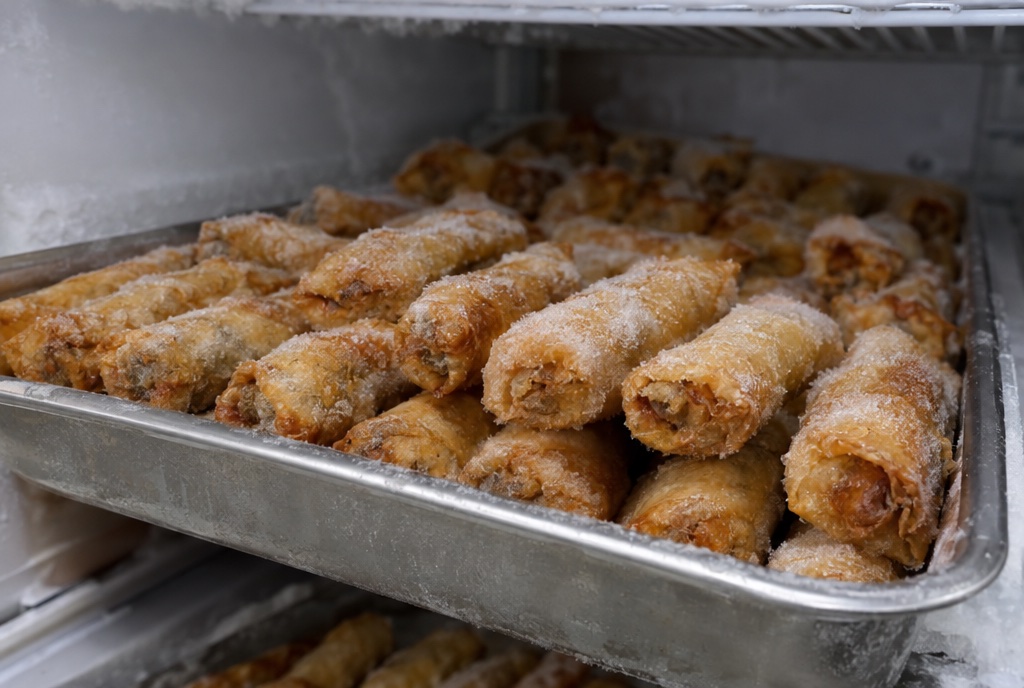
You can export frozen spring rolls (chả giò) to Europe, but the answer depends heavily on what is inside. Vegetarian rolls (vegetables, no animal ingredients) are usually easier. Rolls with meat or seafood count as products of animal origin, fall under strict EU veterinary rules and may not be eligible for import. Whichever type you make, you must keep the cold chain unbroken from your factory to the buyer.
Step one: which filling category do your spring rolls fall into?
Before you think about reefer containers or prices, define the ingredients. This decides everything that follows.
| Filling | General picture | What to do |
|---|---|---|
| Vegetarian (vegetables, glass noodles, mushrooms…) | Not a product of animal origin, so veterinary formalities are usually lighter, but food safety and labelling rules still apply. | Check the full ingredient list carefully, including fish sauce, egg or seasonings with animal components. |
| With meat (pork, chicken…) | Product of animal origin with very strict rules: usually lists of approved countries and establishments, veterinary health certificates and checks at the border. | Confirm with the competent authority whether your product may be imported before you invest. |
| With seafood (shrimp, fish…) | Also a product of animal origin; the processing establishment and raw material sources usually have to meet specific requirements. | Ask clearly about the conditions for your production site and traceability documents. |
To be honest: for rolls with meat or seafood, never assume it will be allowed. Confirm the details for your exact product with the competent authority (in the Netherlands, the NVWA) or ask the Miss Linh team. This article explains the general picture only and is not legal advice.
Cold chain: what you need to keep under control
Quick-frozen food in the EU is generally required to be stored at -18°C or lower. The challenge is not a single freezing step, but keeping the temperature stable over the whole long journey from Vietnam to Europe.
- Freeze deeply enough before leaving your plant: the product should reach the required temperature before it goes on the truck and into the container.
- Reefer container: set the right temperature, check it before loading and monitor it throughout the voyage.
- Temperature loggers: keep temperature data as evidence in case a buyer or inspector asks.
- Handover points: ports, customs clearance, warehouses and delivery vehicles are where the cold chain breaks most easily. Ask your transport partner how they handle each one.
- Packaging that withstands cold: cartons and bags must cope with low temperatures and humidity, avoiding clumping and freezer burn.
General EU rules for frozen food
Beyond veterinary questions, producers need to prepare the following (confirm the details for each product):
- Food-safety certification such as HACCP or ISO. European buyers usually ask for this first.
- EU-compliant labelling: ingredient list, highlighted allergens, shelf life, storage and preparation instructions, producer details, in a language suited to the target market.
- Additives and ingredients: some substances allowed in Vietnam may be restricted in the EU, so review your recipe.
- EORI number and Dutch VAT number for customs and tax procedures.
For spring rolls, the wrapper deserves attention too. If you make your own wrappers or use rice paper, check the ingredients and allergens such as gluten or soy. You can browse the rice paper and wrappers category on Miss Linh to see what similar products are already sold.
Shelf life: remember the buyer
Products must arrive in Europe with enough shelf life left for the buyer. For frozen goods, transport and storage time already use up part of it. Count backwards from the day the product reaches the restaurant or shop, then decide the shelf life printed on the packaging and the pack sizes.
How can Miss Linh help?
Miss Linh is a B2B platform and service provider: you sell your products in your own name to restaurants, caterers, shops, supermarkets and wholesalers in Europe. You remain the owner of the goods until they are sold. Products are stored in a warehouse in the Netherlands, and Miss Linh delivers them to buyers. The team helps with:
- advice on whether a product can be sold in the EU;
- pricing advice;
- setting up VAT and customs, plus transport and customs clearance to the warehouse;
- listing products on the platform, marketing and sales (newsletters, samples, customer visits, trade fairs);
- order handling, collecting payment, delivery, and complaints and returns.
You still take care of food-safety certificates, EU-compliant labelling and packaging, an EORI number and a Dutch VAT number, and Miss Linh helps with each of these steps. On frozen goods, I do not want to promise anything uncertain: please contact the Miss Linh team and ask specifically whether your frozen product is suitable to handle. The team speaks Vietnamese, Dutch and English. Miss Linh earns a commission on products that are actually sold, with no middlemen taking margins, and focuses on small and medium-sized producers, especially women-led businesses.
Steps to take now
- List all ingredients and decide whether your spring rolls are vegetarian, contain meat or contain seafood.
- Confirm with the competent authority or Miss Linh whether that type of product may enter the EU.
- Review your HACCP/ISO certification, your recipe and your EU-style labelling.
- Ask your transport partner about reefer containers, temperature logging and handover points.
- Learn how to become a supplier on Miss Linh and see the producers already on the platform, or browse the snacks category to understand the market.
Frequently asked questions
Are vegetarian spring rolls easier to export than meat ones?
Generally yes, because a product without animal ingredients usually avoids the heaviest veterinary rules. You still need food-safety certification, EU-compliant labels and an unbroken cold chain. Confirm the details for your product.
What storage temperature do frozen spring rolls need?
Quick-frozen food in the EU is generally required to be kept at -18°C or lower. Buyers or transport partners may set their own requirements, so ask before you ship.
Can I sell spring rolls with meat to the EU?
That cannot be taken for granted. Products with meat are subject to specific rules on country, production establishment and veterinary certificates. Ask the competent authority or Miss Linh before you invest in packaging, transport or marketing.
Does Miss Linh accept frozen products?
I do not want to guess on the team’s behalf. Send your product details through the contact page to get a specific answer before you prepare a shipment.