

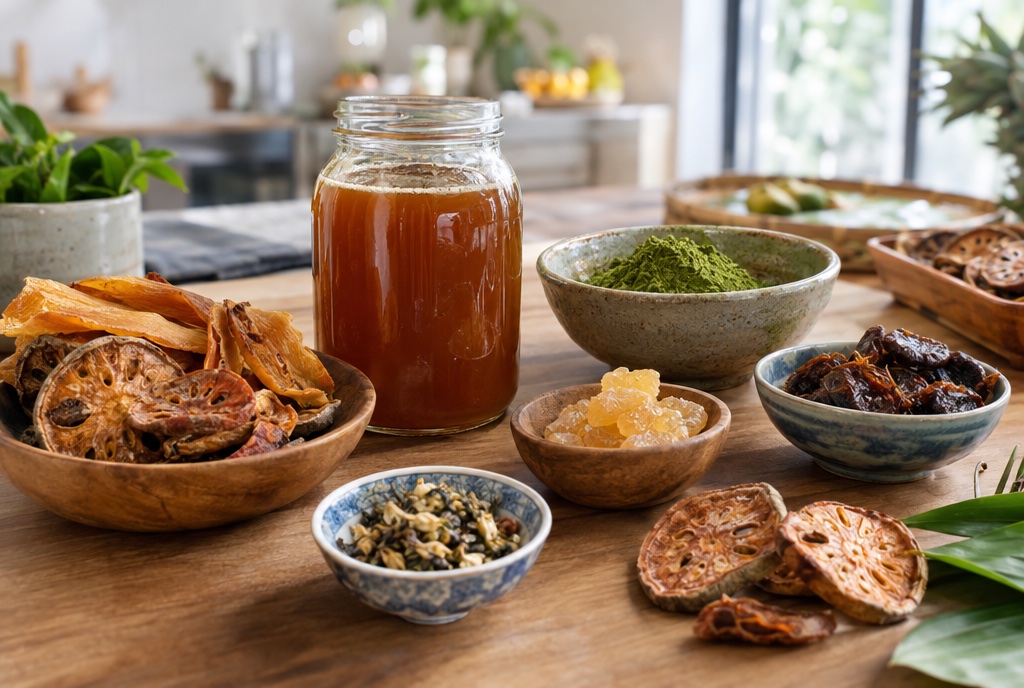
To find out whether your product is a novel food EU case, check whether its ingredients or production process were consumed to a significant degree in the EU before 15 May 1997. If you can show that they were, the product is usually not a novel food. If you cannot, or you are not sure, search the official lists and ask the competent authority before you ship anything. This article walks through the steps in a practical way.
What is a novel food in the EU?
Under Regulation (EU) 2015/2283, a novel food is a food or food ingredient that was not consumed to a significant degree in the EU before 15 May 1997. It must be safety-assessed and authorised before it can be sold. The key point is that the cut-off date is measured against the EU market, not Vietnam. An ingredient that Vietnamese people have eaten for generations can still be a novel food in Europe.
A novel food is not only an exotic ingredient. It can also be:
- a plant, animal, alga or fungus that has never been used as food in the EU;
- a new extract or component isolated from a familiar ingredient;
- a product made with a new production process that significantly changes its structure or nutritional composition.
Steps to check your product yourself
- List every ingredient and process step. Write down the scientific name of each plant, the part used (leaf, flower, root, seed) and how it is processed or extracted.
- Look for evidence of EU consumption before 1997. For example trade documents, traditional recipes or a statement from an importer. Saying the ingredient is common is not enough.
- Search the European Commission’s Novel Food Catalogue. This public database shows whether an ingredient has already been assessed. Note that the catalogue is for guidance only and is not legally binding.
- Check the Union list of authorised novel foods. If your ingredient is on the list, check the conditions of use, the specifications and the labelling requirements.
- Ask the competent authority. If it is still unclear, you or your importer can ask the competent authority of an EU member state to determine the status of your product.
Keep a record of all your search results and documents. This file is useful for you, for your importer and for any later inspection.
What if your product is a novel food?
You have three main routes, depending on your situation. This is the general picture; please confirm the details for your specific product.
| Situation | What to do |
|---|---|
| The ingredient is already on the authorised list | You can sell it if you meet the stated conditions of use, specifications and labelling requirements. |
| Traditional food from a third country (a history of safe use in the country of origin, which by regulation means at least 25 years) | A simpler notification procedure may be possible, with documents proving the history of safe use. |
| A completely new novel food | You must submit an application for authorisation to the European Commission, including an EFSA safety assessment. This needs a lot of documentation and time. |
For small and medium-sized businesses, it is often more realistic to start with products that are not novel foods and to consider more complex products later.
Other special requirements besides novel food
A product that is not a novel food may still have to meet other requirements. Check the following:
- Food supplements and health claims: statements such as “good for the heart” or “boosts immunity” may only be used if they are permitted under the health claims rules.
- Products of animal origin: these usually have their own rules on approved establishments and border controls. Check each product type.
- Pesticide residues and contaminants: the EU sets maximum levels for many product groups, especially spices, tea and dried vegetables.
- Additives, flavourings and allergens: these must be on the permitted lists and labelled correctly.
- Organic products: you may only use the word “organic” with the appropriate certification.
If you make tea, spices or coconut products, pay particular attention to secondary ingredients, extracts and the claims on your packaging.
How can Miss Linh help?
Miss Linh is a B2B platform and service provider where Vietnamese producers sell their products in their own name to European businesses such as restaurants, caterers, shops, supermarkets and wholesalers. As a first step, we advise on whether your product can be sold in the EU and help you see which points need further checking.
You take care of the food-safety certificates (for example HACCP or ISO), EU-compliant labelling and packaging, an EORI number and a Dutch VAT number. Miss Linh helps you with these steps. We do not replace legal advice, and in difficult cases the final answer still comes from the competent authority.
You can read how to become a supplier on Miss Linh or look at the producers already on the platform. If you have a specific product to ask about, contact the Miss Linh team. We speak Vietnamese, Dutch and English.
Frequently asked questions
Is a traditional Vietnamese product automatically not a novel food?
No. What matters is consumption in the EU before 15 May 1997, not the history of use in Vietnam. However, a long history of safe use in Vietnam can help if your product follows the procedure for traditional foods from third countries.
Is the Novel Food Catalogue enough to reach a conclusion?
Not entirely. The catalogue is very useful for guidance, but it is not legally binding and may not describe the exact form of your product. If you have doubts, ask the competent authority of an EU member state.
What if the ingredient is familiar but processed in a new way?
A new production process that significantly changes the structure or nutritional composition of a food can also make the product a novel food. Describe your process carefully and check before you export.
When should I check novel food status?
As early as possible, before you invest in labels, packaging and transport. If you find out late, the goods may not be sellable, and you lose both the time and the money already spent.